
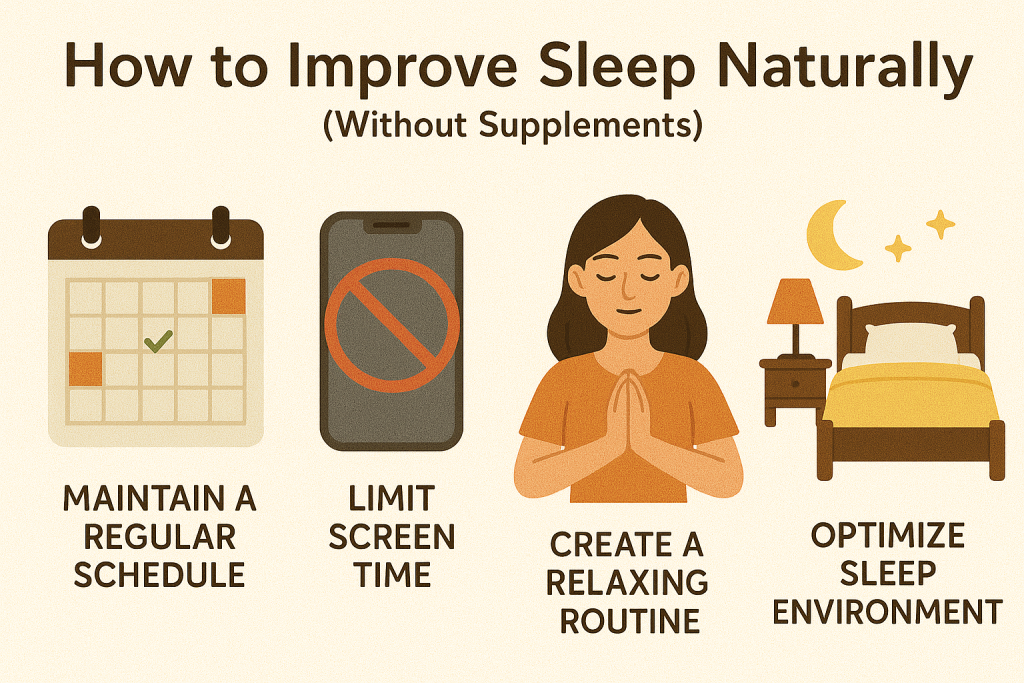
In a world saturated with quick fixes and pill bottles promising instant slumber, How to Improve Sleep Naturally the quest for truly restorative sleep often feels like a losing battle. Yet, the foundation of good sleep isn’t found in a capsule; it’s built upon the bedrock of daily habits, environment, and mindset. Achieving deep, natural sleep is a skill—one that requires consistency, self-awareness, and a return to the rhythms our bodies inherently understand. This guide explores powerful, evidence-based strategies to improve your sleep naturally, without relying on supplements.
Understanding the “Why”: The Pillars of Natural Sleep
Before diving into the “how,” it’s crucial to understand the “why.” Our sleep is governed by two primary biological systems:
Your Circadian Rhythm: This is your internal 24-hour clock, regulated by light exposure. It dictates when you feel alert and when you feel drowsy.
Sleep-Wake Homeostasis: Think of this as your “sleep pressure.” The longer you’re awake, the more the pressure builds, culminating in the drive to sleep. A good night’s sleep resets this pressure.
Natural sleep improvement works by harmonizing these two systems through your daily choices. It’s about creating the optimal internal and external conditions for sleep to occur effortlessly.
Part 1: Mastering Your Daily Rhythm (Daytime Habits)
The journey to better sleep begins the moment you wake up.
1. Embrace the Light, Respect the Dark
Light is the most powerful cue for your circadian rhythm.
Morning Sunlight: Aim for at least 15-30 minutes of natural light exposure within the first hour of waking. This signals to your brain that the day has started, suppresses melatonin (the sleep hormone), and sets your clock for a melatonin release later that night. A morning walk is ideal.
Daytime Bright Light: Seek bright light throughout the day. This reinforces a strong circadian signal and boosts daytime alertness, making the contrast with night more potent.
Dim the Lights at Night: As the sun sets, start reducing your exposure to bright, especially blue, light. Use dim, warm-toned lights in your home. This tells your brain that night is approaching and primes melatonin production.
2. Move Your Body, But Time It Right
Regular physical activity is one of the most effective, Morning Routine for Energy science-backed ways to improve sleep quality and duration. It reduces stress, tires the body physically, and helps regulate mood.
Aim for Consistency: Even 30 minutes of moderate aerobic exercise (like brisk walking, cycling, or swimming) most days can make a significant difference.
Mind the Timing: While exercise is beneficial anytime, vigorous exercise too close to bedtime (within 1-2 hours) can be stimulating for some people due to the release of endorphins and a rise in core body temperature. If you exercise late, opt for gentle movement like stretching or yoga.
3. Fuel for Sleep: Mindful Eating and Drinking
What you consume has a direct impact on your sleep architecture.
Caffeine Cut-off: Caffeine has a half-life of 5-6 hours. A coffee at 3 PM means half that caffeine is still in your system at 8 PM. Establish a strict cut-off time, ideally by early afternoon.
Alcohol Awareness: While alcohol may make you feel drowsy initially, it severely fragments sleep in the second half of the night, disrupting REM sleep (the restorative dreaming phase) and leading to non-refreshing sleep.
Heavy Meals and Late Snacks: Avoid large, rich meals within 3 hours of bedtime. Digestion can disrupt sleep. If you need a snack, opt for something small and sleep-friendly, like a banana, a handful of almonds, or a small bowl of oatmeal.
Hydrate Early: Drink plenty of water during the day but taper off in the evening to minimize disruptive nighttime trips to the bathroom.
Part 2: Crafting the Perfect Sleep Sanctuary (Your Environment)
Your bedroom should be a temple for sleep—cool, dark, quiet, and clutter-free.
1. Prioritize Darkness
Even small amounts of light can interfere with melatonin.
Blackout is Best: Invest in high-quality blackout curtains or a sleep mask.
Eliminate Electronics: Banish TVs, laptops, and charging LEDs. Cover any standby lights you can’t remove with black electrical tape.
2. Optimize Temperature
A cool room is non-negotiable for sleep. Your core body temperature needs to drop to initiate sleep.
The Sweet Spot: Most research suggests an ideal bedroom temperature between 60-67°F (15.5-19.5°C).
Bedding Layers: Use breathable, natural fabrics (like cotton or linen) and layer blankets so you can adjust easily.
3. Cultivate Quiet and Calm
Sudden or consistent noise can shift you into lighter sleep stages or wake you up.
White Noise: If you can’t control ambient noise (traffic, neighbors), a white noise machine, fan, or simple app can mask disruptive sounds with a consistent, soothing hum.
Earplugs: A simple, effective solution for many.
4. Reserve Your Bed for Sleep (and Sex Only)
This is a cornerstone of good “sleep hygiene.” Your brain should form a powerful association between your bed and sleep.
Break the Bad Habits: Avoid working, watching stimulating TV, scrolling on your phone, or even worrying in bed. If you can’t sleep after 20 minutes, get up, go to another room, and do something relaxing in dim light until you feel sleepy.
Part 3: The Wind-Down Ritual (Evening Routine)
A consistent, relaxing pre-sleep routine is the bridge from the busyness of the day to the peace of the night. Aim for 60-90 minutes of winding down.
1. The Digital Sunset
This is the single most impactful change for many people.
Set a Firm Boundary: Disconnect from phones, tablets, computers, and TVs at least 60 minutes before bed. The blue light emitted suppresses melatonin, and the content (emails, news, social media) is mentally stimulating and anxiety-inducing.
2. Activate the Relaxation Response
Engage in calming activities that signal safety to your nervous system.
Gentle Stretching or Yoga: Focus on relaxing, restorative poses (like legs-up-the-wall or child’s pose).
Reading: A physical book (not a backlit e-reader) under soft light is perfect.
Mindfulness or Meditation: Apps like Insight Timer or Calm offer guided sleep meditations or body scans specifically designed to quiet the mind.
A Warm Bath or Shower: The rise and subsequent drop in core body temperature after a bath can powerfully trigger drowsiness.
Gentle Music or Audiobooks: Opt for calm, instrumental music or a familiar, soothing voice.
3. Practice Gratitude or “Brain Dump”
Worries and to-do lists are sleep’s greatest enemies.
Keep a Journal: Spend 5 minutes writing down things you’re grateful for from the day. This cultivates a positive mindset.
The “Brain Dump”: If your mind is racing, write down every thought, task, or worry on a notepad by your bed. The act of externalizing it frees your mind to let go for the night.
Part 4: Mastering Your Mindset (The Mental Game)
Sometimes, the biggest barrier to sleep is our own anxiety about not sleeping.
1. Reframe the “Trying”
The harder you try to sleep, the more elusive it becomes. Shift your goal from “I must sleep” to “I will rest peacefully.” Lying calmly in a dark room is still restorative, even if you’re not fully asleep.
2. Manage Stress Proactively
Daytime stress that isn’t processed will visit you at night.
Daily Practice: Incorporate short stress-management practices into your day—5 minutes of deep breathing, a lunchtime walk, or journaling. This prevents stress from accumulating.
Cognitive Behavioral Therapy for Insomnia (CBT-I): This is the gold-standard, non-drug treatment for chronic sleep issues. It involves working with a therapist or using a structured digital program to change unhelpful thoughts and behaviors around sleep.
3. Keep a Consistent Schedule (Yes, Even on Weekends)
This is the unsung hero of natural sleep regulation. Go to bed and wake up at the same time every single day, with no more than a 60-minute variance on weekends. Consistency anchors your circadian rhythm more powerfully than anything else.
Conclusion: The Path to Sustainable Sleep
Improving your sleep naturally is not about a single magic bullet; it’s about the cumulative power of small, consistent choices. It’s a holistic practice that touches how you spend your days, how you design your environment, and how you prepare your mind for rest.
Start small. Pick one or two strategies from this guide—perhaps establishing a digital sunset and fixing your wake-up time—and practice them diligently for two weeks. Observe the changes. Then, gradually layer in more habits.
Be patient and compassionate with yourself. Years of poor sleep habits won’t disappear overnight, but the neural pathways to good sleep can be rebuilt. By returning to these fundamental rhythms—light, dark, activity, rest, and calm—you are not just chasing sleep, you are reclaiming your natural biological inheritance: the profound, restorative power of a good night’s rest.